
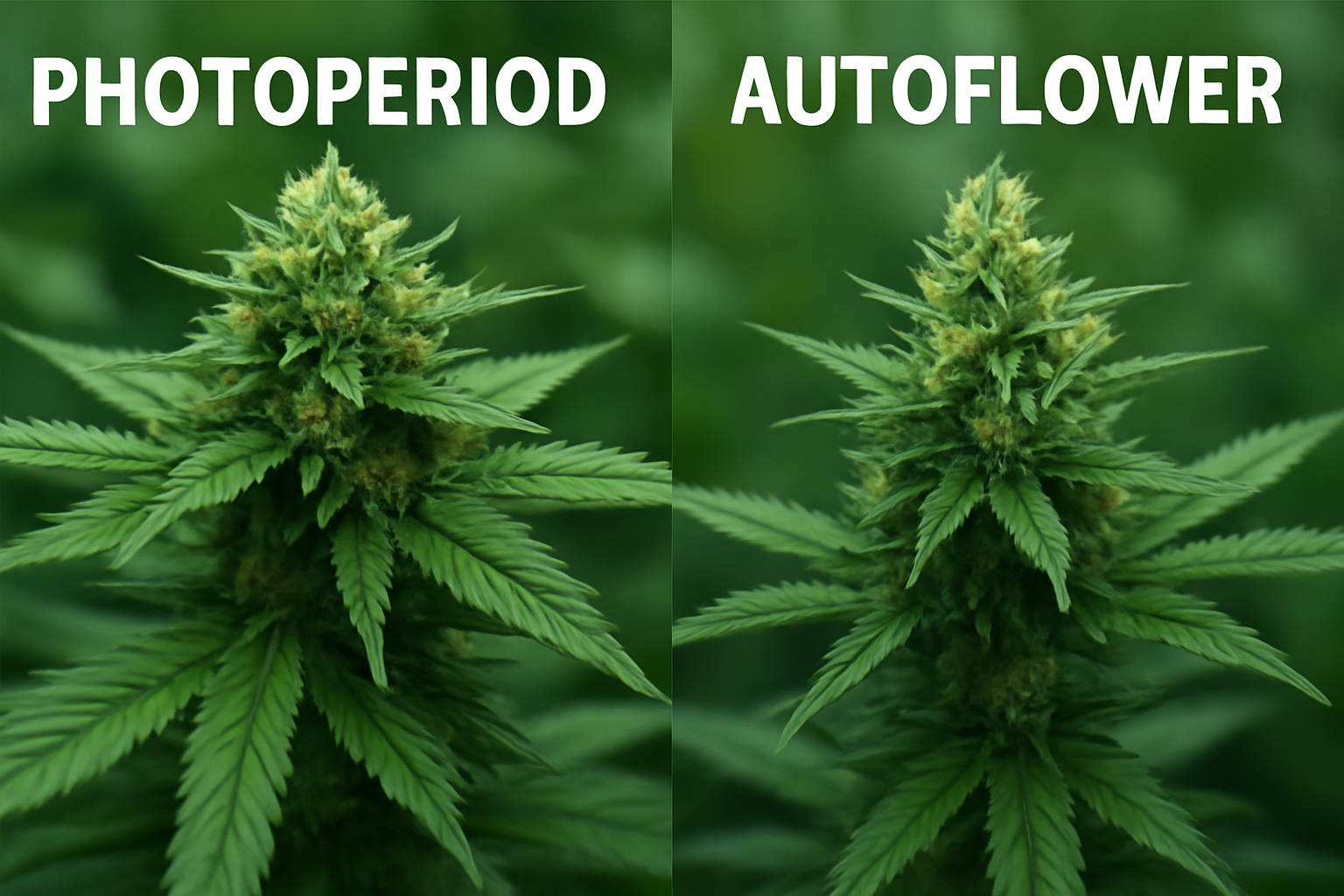
Which Grows Faster? A Comparative Look at Autoflower and Photoperiod Cannabis Timelines
Autoflower seeds have a speed advantage against photoperiod, consistently completing growth timeline cycles in 8-12 weeks compared to 16-24 weeks with photoperiod seeds. The difference in timelines is monumental because of their inherited genetic programming from Cannabis ruderalis and its development to flower rapidly in harsh northern climates with short growing seasons.
Deconstructing the Timeline Differences
An autoflower seed that is germinated today will produce harvestable buds in approximately 70-85 days from today. The plant will go from seedling phase to vegetative stage in 2-3 weeks, and will subsequently begin flowering regardless of the light period, on its own. In contrast, a photoperiod seed can take anywhere from 4-8 weeks to produce vegetative growth before activating the flowering stage using 12 hour light-to-dark cycles, adding 12+ weeks to the total lifecycle timeline.
Vegetative Phase Comparison
Autoflower seeds remain in the vegetative phase for only 3-4 weeks before the genetic flowering stage is triggered. This shorter timeline, however, will restrict plant size but increase the speed of harvest. Photoperiod seeds, however, can stay in vegetative growth indefinitely while being grown under lighting periods of longer than 18 hours keeping control over plant size and increasing yields by extending vegetative growth time.
Flowering Phase Dynamics
Once the flowering stage begins, the autoflower and photoperiod plants will progress at parallel rates, typically taking up to 6-9 weeks before bud development is complete. Although, a further distinction remains. Autoflowers initiate flowering on their own, while photoperiod plants require the cultivator to alter the environment to flower.
Multiple Harvests
Autoflower seeds allow for multiple harvests because of their shortened life cycle. Outdoor growers can harvest 2-3 complete cycles in the entire growing season. Meanwhile, photoperiod seeds will only allow for a single harvest in most cases. Indoor cultivators can take advantage of continuous production cycles throughout the year, by starting new seeds every 2-3 weeks.
Environmental Control
Photoperiod seeds require the most care and consideration for light cycle management, relying on a series of expensive timers and programmable systems to ensure consistent light, and require a specific dark period to trigger flowering. Autoflower seeds have a greater leeway for light cycle, as they grow well year-round under a consistent light cycle of 18, 20 hours for their entire life cycle. The advantages are simplicity, fewer costs for equipment, and less potential for spoilage from light leaks.
Yield Expectancies vs Speed
An outdoor photoperiod plant could yield between 4-8 ounces after 20 weeks of growing, whereas an autoflower seed could yield between 1-4 ounces in 10 weeks. Nonetheless, multiple harvests of autoflower would likely yield comparable amounts as, if not greater than photoperiod seeds, in a year.
Implications of Cultivation Strategy
The decision between autoflower and photoperiod seeds alters your entire cultivation strategy. Autoflower seeds will cater to the grower who is seeking speed, simplicity, and multiple harvests. Meanwhile, photoperiod seeds will work for the grower looking to maximize yields per plant, or enjoy the elusive possibility of creating generated clones, preserving your workforce. Both methods offer benefits toward the cultivators goals, but also the growers experience.