
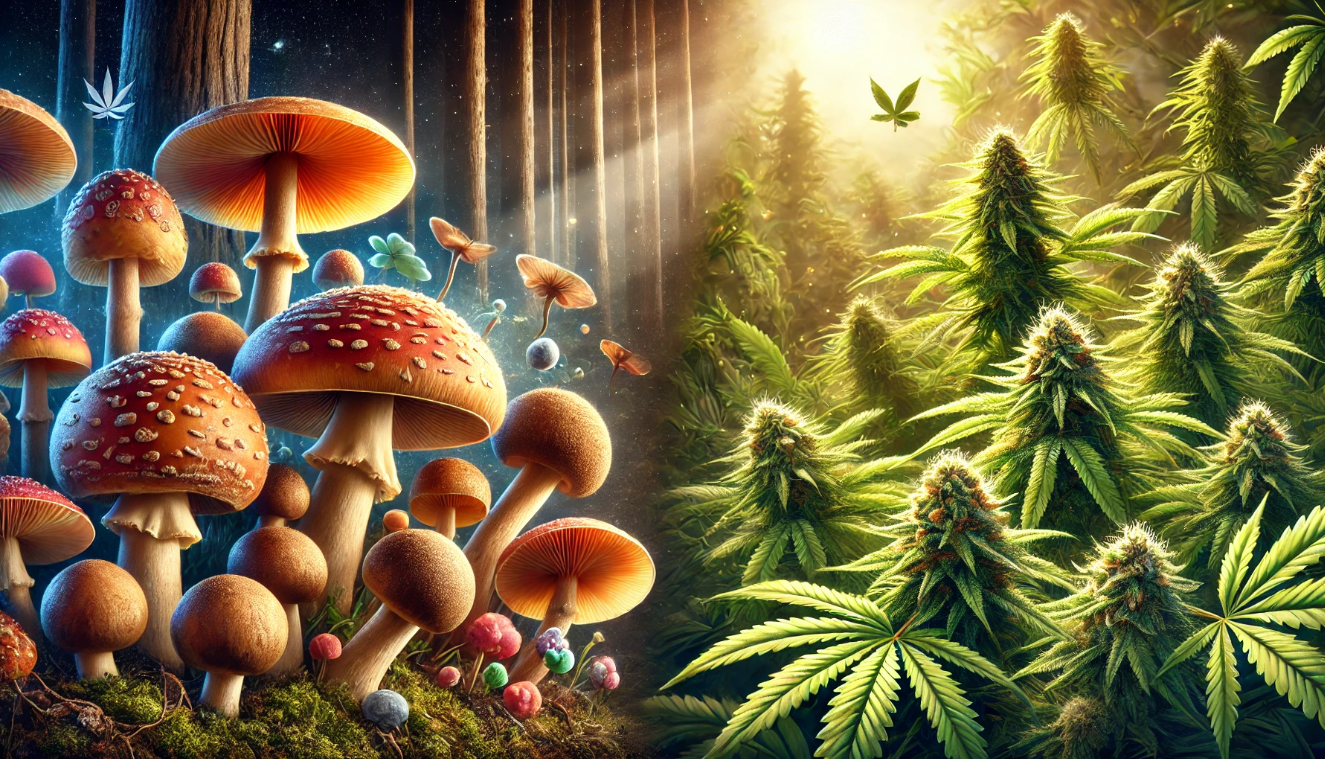
Mushrooms and Cannabis: How They Compare
Mushrooms containing psilocybin and cannabis represent two of humanity’s most historically significant psychoactive substances, each with deep cultural roots stretching back thousands of years. While fundamentally different in their chemical composition and effects, both have journeyed from ancient ceremonial use to prohibited substances and now increasingly toward therapeutic legitimacy in modern medicine.
Despite their superficial similarities as natural substances with psychoactive properties, psilocybin mushrooms and cannabis interact with entirely different neurological systems. Cannabis primarily affects the endocannabinoid system through compounds like THC and CBD, modulating neurotransmitter release throughout the brain and body. Psilocybin, conversely, acts primarily on serotonin receptors, creating its characteristic effects through temporarily altered serotonin signaling rather than through cannabinoid pathways.
Experiential Differences
The subjective experiences produced by these substances differ dramatically in both nature and duration. Cannabis typically produces effects lasting 2-4 hours characterized by mild sensory enhancement, altered time perception, and potential shifts in mood ranging from euphoria to occasionally anxiety. The experience generally permits functional consciousness, allowing users to maintain awareness of their surroundings and engage in various activities, though cognitive impacts may include short-term memory effects and altered attention.
Psilocybin mushrooms, by contrast, create a substantially more profound 4-6 hour experience often characterized by visual distortions, synesthesia (sensory crossover), and potentially significant shifts in perception and cognition. At higher doses, many users report mystical-type experiences including unity consciousness, transcendence of time and space, and profound personal insights.
Therapeutic Horizons
Cannabis shows potential particularly for conditions involving pain, inflammation, seizures, and certain movement disorders. Its ability to stimulate appetite while reducing nausea has proven valuable for cancer patients undergoing chemotherapy. Additionally, some evidence suggests benefits for sleep disorders, PTSD symptoms, and anxiety, though results vary significantly based on cannabinoid ratios and individual factors.
Psilocybin’s therapeutic potential centers more on psychological conditions, with particularly strong evidence emerging for treatment-resistant depression, end-of-life anxiety, and substance use disorders. Unlike cannabis, which typically requires ongoing administration, psilocybin therapy often involves just one or few supervised sessions that catalyze lasting psychological changes through a combination of neuroplasticity effects and profound emotional-cognitive experiences.
Legal Landscape and Research Environment
The legal status of both substances continues evolving rapidly, though along different trajectories. Cannabis has achieved broader mainstream acceptance, with numerous states and countries implementing medical programs and increasingly full legalization. Mushrooms containing psilocybin remain more restricted, though several jurisdictions have recently decriminalized possession. Research access differs similarly, with cannabis research facing fewer regulatory hurdles than psilocybin studies, though both fields have expanded significantly in recent years.
As research continues expanding, these ancient plants increasingly demonstrate that their full therapeutic potential may emerge not from isolation of single compounds but from their complex natural chemistry working synergistically.