
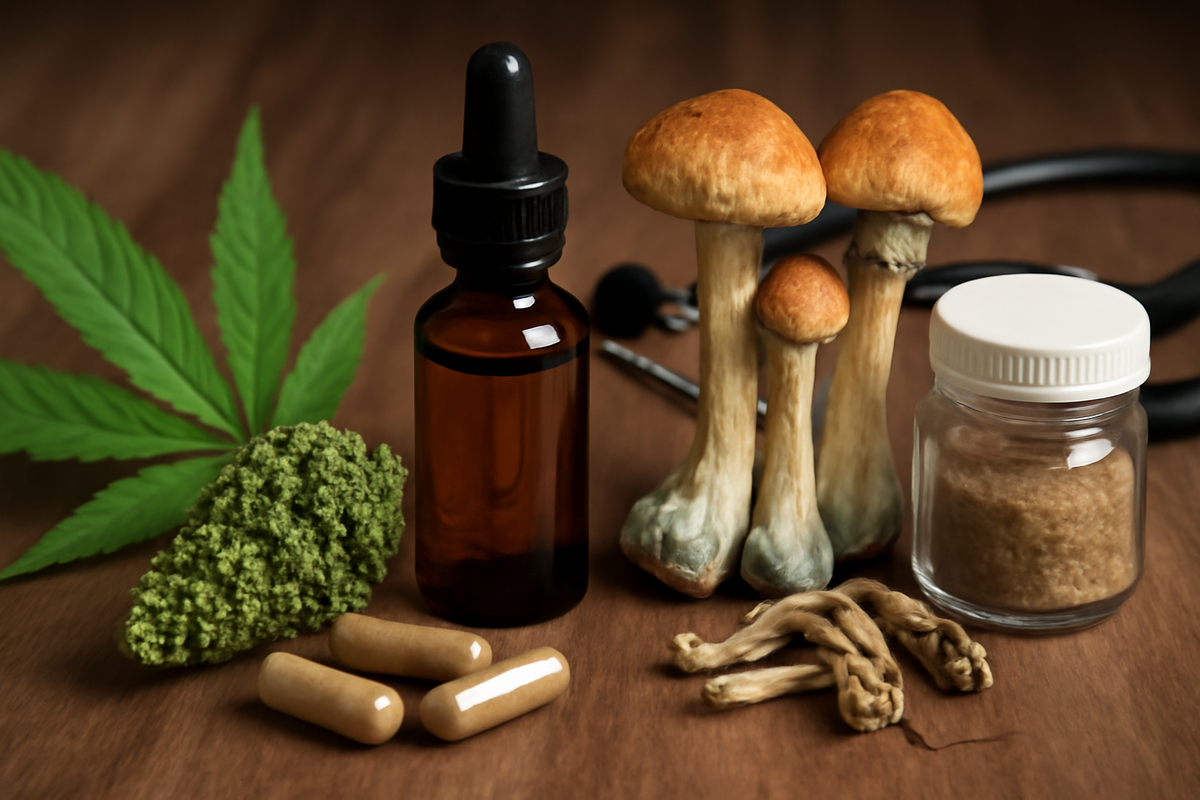
Cannabis and Psilocybin - Medical Treatments
The medical trajectory is changing dramatically: Cannabis and Psilocybin have moved out of the shadows of nearly 100 years of prohibition and become legitimate therapeutic tools.
The most recent clinical breakthroughs indicate that these are not just alternative medications, but potential therapies for treatment-resistant medical conditions.
The Importance of Dosing – Concentrating on Success
Unlike lately, which is often full of guesswork when it comes to dosing for cannabis and psilocybin medical treatments, your focus should be reliant on precision.
- Cannabis (THC): start with 2.5 to 5 mg
- Psilocybin: start with 0.1 to 0.3 g
This not only diminishes the opportunity for adverse effects, but also helps develop a baseline of individual tolerance.
Record patient responses through a structured journaling process and amend the treatment based on what you have learned every 3–5 days.
Aiming Towards Specific Conditions – Compound to Challenge
Not all medical conditions respond uniformly to these treatments:
- Depression and Anxiety: 60% efficacy of psilocybin when treatment-resistant
- Chronic Pain: Cannabis proved superior in results when treating neuropathic type conditions
- Post Traumatic Stress Disorder (PTSD): Details of combined protocols produced a promising preliminary outcome
- Epilepsy: Cannabis with a higher level of CBD produced seizure reduction
Consideration of the neurochemical pathways will also point to potential treatment success rates.
Legal Issues – Compliance and Clinical Procedure
The research and clinical work on Medical Cannabis and Psilocybin exist in a highly-regulated space.
- Establish relationships with licensed dispensaries
- Understand your state’s patient protections
- Always document your treatment protocol
Oregon, Colorado, and a few other jurisdictions are now using the legal framework for supervised psilocybin therapy, giving stronger legal support mechanisms.
Integration Policy – More Than Just the Medication
Cannabis and Psilocybin medical treatments could be successful, but they are more than just administering the compounds.
A comprehensive integration policy will determine the outcomes of your treatment.
Phase | Duration | Area of Focus |
Pre-treatment | Weeks | Preparation of the patient and exploratory expectations |
Active phase | Variable | Monitoring the administration of the compound(s), safety protocols |
Integration | Weeks | Processing patient’s experiences, lifestyle adjustments |
Collaborate with Professional Resources in Your Treatment Network
Cannabis and Psilocybin medical treatments often require a multi-faceted approach:
- Network with psychiatrists who are interested in psychedelic therapy
- Connect with a pain management specialist experienced in medical cannabis
- Work with a licensed therapist who can support integration work
This not only provides comprehensive care to your patient but also protects you from professional liability.
These practices are the future of medicine. Approach them with a scientific lens to assess, monitor developments, and incorporate clinical practice within a regulated framework.