
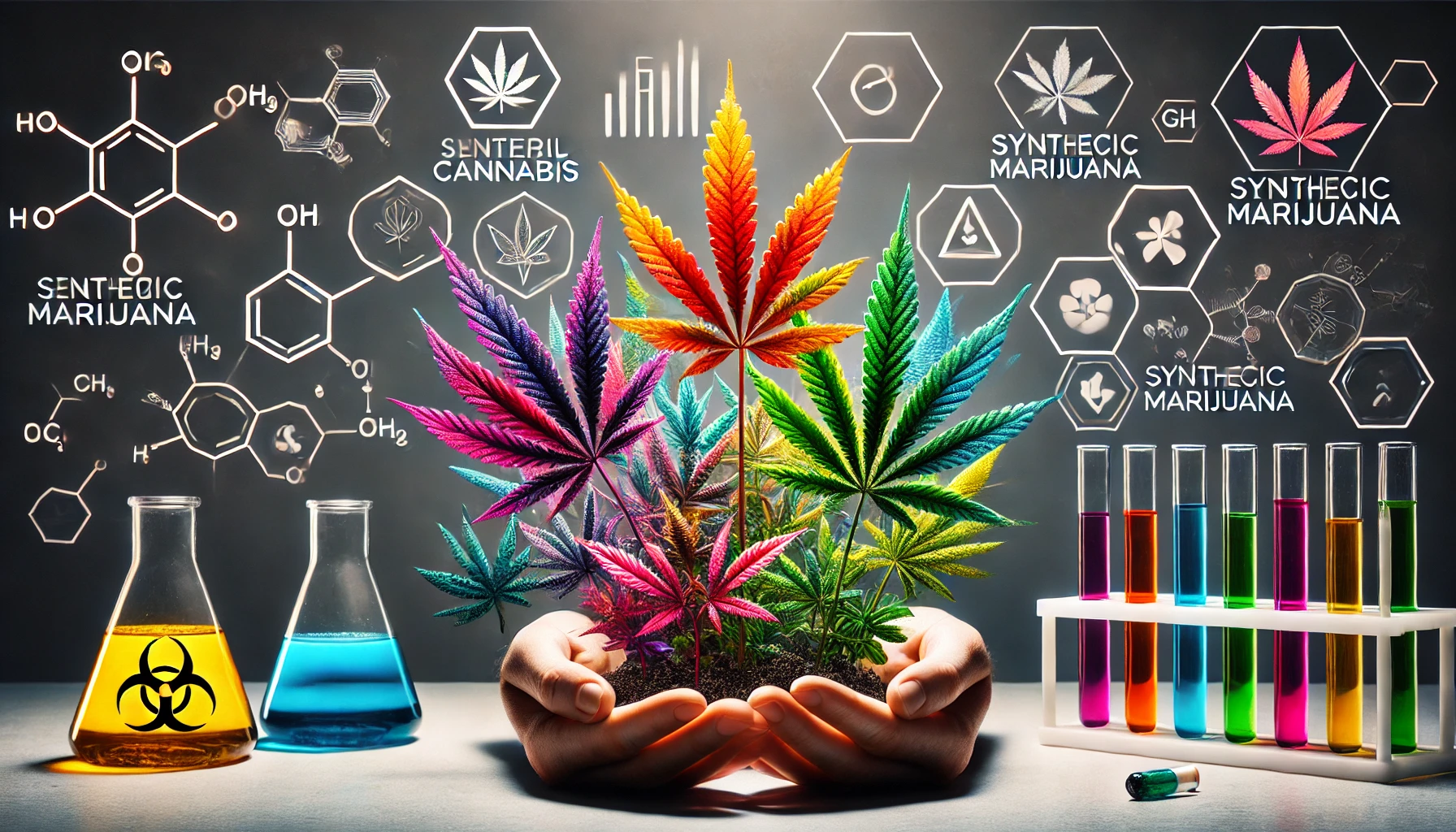
Synthetic Marijuanas: An In-Depth Look at Synthetic Cannabis
- by Qualitycannabisseeds
- 4 minutes
Synthetic marijuana, commonly referred to as synthetic cannabis, is gaining notoriety in the realm of recreational drug use. Unlike natural cannabis, which is derived from the Cannabis sativa plant, synthetic variants are man-made and designed to mimic the psychoactive effects of the natural herb. This article explores the key distinctions between natural and synthetic cannabis, shedding light on the chemical intricacies and the associated risks of synthetic variants.
Understanding Synthetic Cannabis
Synthetic cannabis is a blanket term for a variety of artificial substances created to simulate the effects of THC, the primary psychoactive component of natural cannabis. These substances, known as synthetic cannabinoids, are often sprayed onto plant material and sold under names like “Spice” or “K2.” Unlike natural cannabis, the chemical composition of synthetic variants can vary widely, leading to unpredictable and often severe effects.
How to Make Synthetic Cannabis
The process of creating synthetic cannabinoids involves synthesizing chemicals that can bind to the same brain receptors as THC. Typically, these chemicals are produced in laboratories and involve complex organic reactions, highlighting the substantial difference from the naturally occurring cannabinoids found in traditional cannabis. It is crucial to understand that producing and distributing synthetic cannabis is illegal in many places and poses significant health risks, often leading to severe medical consequences.
Symptoms of Synthetic Cannabis Use
Users of synthetic cannabis may experience a range of acute symptoms, some of which are far more severe than those associated with natural cannabis. These can include:
- Rapid heart rate
- Vomiting
- Extreme anxiety and paranoia
- Hallucinations
- Violent behavior
- Seizures These symptoms starkly contrast with the often milder effects of natural cannabis, such as relaxation and euphoria, and reflect the dangerous unpredictability of synthetic substances.
Synthetic Cannabis Testing
Detecting synthetic cannabis is a challenge for drug testing due to the constantly changing formulas of these chemicals. Traditional drug tests, which are designed to detect natural THC, often fail to identify synthetic cannabinoids. This poses significant challenges for health professionals and law enforcement agencies who are striving to keep up with the rapid development of new synthetic variants.
Long Term Effects of Synthetic Cannabis
The long-term effects of synthetic cannabis can be severe and debilitating. Studies have documented a range of long-lasting physical and psychological impacts, including:
- Chronic psychosis
- Irreversible neurological harm
- Increased risk of heart attacks
- Dependency and withdrawal issues Research into these effects is ongoing, but the evidence strongly indicates significant adverse health impacts from prolonged use.
Legal and Health Implications
The legal status of synthetic cannabis varies widely, with many jurisdictions banning the substances outright due to health concerns. Health authorities worldwide have issued warnings about the risks associated with synthetic cannabis, emphasizing its potential for causing life-threatening conditions and its lack of medical benefit.
The rise of synthetic cannabis is a troubling trend in drug use, marked by significant health risks and legal complexities. It is crucial for users and the public to be educated about the dangers associated with these substances and for continued vigilance and adaptation in policy and public health approaches.
For those seeking more information or help regarding synthetic cannabis issues, numerous resources are available. Websites like the National Institute on Drug Abuse (NIDA) provide comprehensive information and updates on the status of synthetic cannabinoids, while various health organizations offer support and counseling for those affected by drug use.