
Stop and search: cannabis, race, and policing in the UK
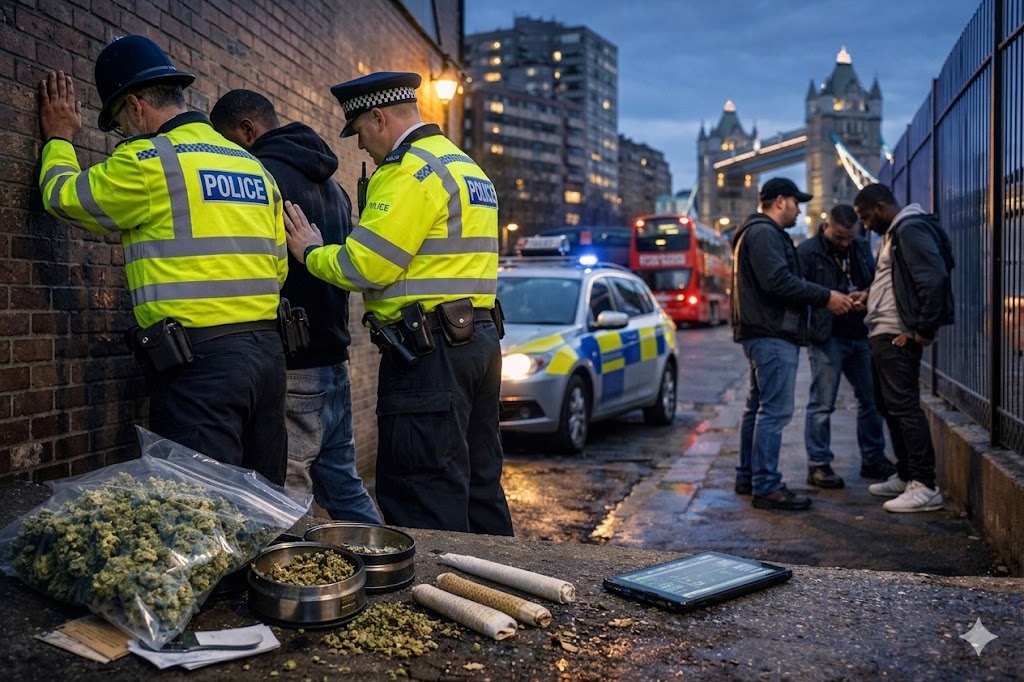
The discussion around cannabis within the united kingdom will always include the Numbers on the street. Discussions at a higher level typically involve the possibility of generating revenue through taxes and potential medicinal uses of the plant. The bottom line for those experiencing daily life as part of certain communities is defined by a single police action: stop and search.
Cannabis is not simply a plant to many communities; it represents the “first step” into the criminal justice system for those stopped and searched, and the available data indicates that this experience does not apply to everyone equally.
Numbers: a growing divide
Although there has been momentum for reform of policing throughout the country, the way in which enforcement of drug related laws vary significantly among different ethnicities remains a highly debated aspect of policing in the united kingdom. Data gathered from 2025 and early 2026 clearly indicate that this trend persists.
Statistic | White Ethnic Group | Black / Black British Group |
Search Rate | ~6 per 1,000 people | ~25 per 1,000 people |
“Find” Rate | Higher (More likely to find drugs) | Lower (Searches less likely to be successful) |
Arrest via Search | ~5% of all arrests | ~17% of all arrests |
Object of Search | Mixed (Weapons/Theft) | Primarily Drugs (58%+) |
Source: metropolitan police performance data / home office (august 2025 – january 2026)
The smell paradox
One of the most commonly cited reasons for stopping someone is due to the smell of cannabis. As has been previously mentioned, however, police guidelines (as well as several prominent court decisions) consistently state that, while smell may provide some probable cause, it is rarely sufficient reason to search someone.
This paradox exists because Self-Generated Searches are conducted using an officer’s own subjective judgment of what they believe constitutes reasonable suspicion. Research demonstrates that subjective stops represent the greatest disparity in terms of race, resulting primarily from unconscious biases rather than having witnessed actual crimes.
Section 60: policing without suspicions
In contrast to the majority of Searches, which are initiated when a member of law enforcement has “reasonable grounds” to do so, Section 60 allows members of law enforcement to conduct Searches of anyone in a particular geographic area without having any suspicions whatsoever.
- Justification: typically used in response to an increased concern about violent crime or knife crime.
- Reality: these types of orders result in numerous low-level finds of cannabis. Critics contend that Section 60 is often used as a means of conducting large-scale sweeps (or “dragnets”) which affect disproportionately young black males who are already distrustful of police, thereby contributing to decreased levels of public trust in law enforcement.
“…when we see that the ‘find’ rate for Drugs is lower for black individuals than for White individuals, we can infer that the level of suspicion required to stop black people is much lower.” — Excerpt from hmicfrs racial disparities report.
Human costs: loss of trust and psychological trauma
Furthermore, research has demonstrated a clear psychological effect associated with repeated exposure to police encounters regarding low-level possession offenses such as marijuana.
- Trust Deficit: repeatedly being stopped and searched for minor possessions of marijuana results in communities feeling both excessively policed and inadequately protected.
- The “black box” of data: roughly 20 percent of stop and search incidents fail to record ethnicity or report it as “unknown,” leading to fears that the full extent of disparities between races is actually greater than reported by official statistics.
Q & a: legal rights vs. Real life
- May you be stopped solely based upon smelling cannabis?
Technically speaking, according to the College of Policing, smelling cannabis alone would be insufficient probable cause to conduct a search. However, as stated above, officers will combine their “smell” finding with other characteristics (e.g., behaving nervously), etc. To create probable cause. - What is the “police race action plan”?
Launched in 2025 this plan seeks to address racial disparities nationwide. It provides new toolkits for monitoring data and Community Scrutiny Panels designed to hold individual law enforcement agencies responsible for excessive stops of minorities. - Is anything changing in 2026?
Pressure is mounting for diversion schemes across all UK forces, whereby individuals possessing small amounts of cannabis are provided support or warnings instead of Arrest, to limit damage caused by repeated involvement with the justice system and long term impacts on minority groups.